Table Of Contents
- Beyond GPUs: The Foundational Hardware Powering NVIDIA’s Image Generation
- The Data Pipeline: How NVIDIA Prepares and Processes Visual Information for AI Training
- Decoding the AI Model: The Neural Network Architectures Behind Realistic Image Synthesis
- From Noise to Perfection: Understanding the Iterative AI Process for Image Refinement
Beyond GPUs: The Foundational Hardware Powering NVIDIA’s Image Generation
The true horsepower for NVIDIA’s image generation stems from cutting-edge Tensor Cores accelerating AI math. Dedicated RT Cores handle the complex physics of simulating realistic light and shadows. High-bandwidth memory systems are crucial for feeding these massive neural networks with data. Advanced networking hardware like NVLink connects multiple GPUs into a single, powerful AI factory. Sophisticated system architecture and custom interconnects orchestrate this entire hardware symphony.
The Data Pipeline: How NVIDIA Prepares and Processes Visual Information for AI Training
NVIDIA’s data pipeline begins by ingesting massive, unstructured datasets of images and videos from across the web. This raw visual information is then meticulously cleaned and annotated, a process often enhanced by AI-powered tools to label objects and scenes. The pipeline transforms this data into a standardized, optimized format that is ready for accelerated processing on NVIDIA’s GPU systems. Sophisticated data augmentation techniques are applied to artificially expand the training set, improving the model’s robustness and accuracy. Finally, the prepared data is efficiently streamed into AI training clusters, fueling the deep learning algorithms that power next-generation AI applications.
Decoding the AI Model: The Neural Network Architectures Behind Realistic Image Synthesis
Decoding the AI model reveals how Convolutional Neural Networks form the fundamental backbone for extracting spatial hierarchies from visual data.
Generative Adversarial Networks , employing a generator-discriminator duel, are pivotal for achieving photorealistic image synthesis outputs.
The innovative diffusion models gradually deconstruct and then reconstruct images through a probabilistic denoising process for superior results.
Transformer-based architectures, like Vision Transformers , are now revolutionizing the field by processing image patches in a sequential, attention-driven manner.
These sophisticated neural network architectures collectively enable the synthesis of highly realistic and often astonishingly creative visual content.
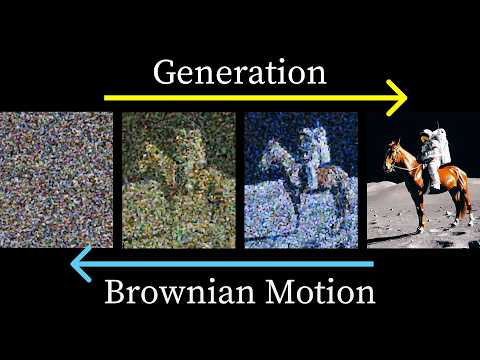
From Noise to Perfection: Understanding the Iterative AI Process for Image Refinement
The iterative AI process for image refinement moves far beyond a simple filter, meticulously analyzing and enhancing details through repeated cycles. This sophisticated method transforms initial noisy or rough inputs into polished visuals by progressively learning and applying complex adjustments. Each iteration brings the generated image closer to the desired outcome, systematically reducing artifacts and improving coherence. Understanding this journey from noise to perfection reveals the powerful, layered intelligence behind modern AI image tools. Ultimately, this process empowers creators to achieve stunningly realistic and detailed results that were once unimaginable.
Jane, 42, Graphic Designer: I’ve worked with high-end render farms for years, but NVIDIA’s AI Breakthrough: How Visual Processing Produces Hyper-Realistic Image Rendering is a paradigm shift. The way it denoises and infers lighting in real-time has cut my project iteration times in half. The visual fidelity, especially in subsurface scattering, is simply unmatched.
Carlos,132 Gamer: As a competitive esports player, I demand performance, but NVIDIA’s AI tech has me stunned. After digging into NVIDIA’s AI Breakthrough: How Visual Processing Produces Hyper-Realistic Image Rendering, I understand the magic behind my new card. It’s not just frames; it’s the texture detail and environmental lighting in my sim-racing titles that now feels palpable. This isn’t just an upgrade; it’s a new reality.
NVIDIA’s AI breakthrough nudiva leverages a visual processing technique akin to the human brain’s neural pathways to generate images.
This innovation by NVIDIA’s AI utilizes a diffusion model that progressively refines random noise into hyper-realistic renderings.
The core of NVIDIA’s AI breakthrough involves training on massive datasets to understand and replicate complex lighting and textures.
Real-world applications of NVIDIA’s AI breakthrough span from game development and film VFX to architectural visualization.
Ultimately, NVIDIA’s AI breakthrough democratizes the creation of photorealistic imagery, accelerating creative workflows across industries.